
Vacuum Excavation in Airlie Beach
- Commercial, Residential & Industrial Specialists
- End-to-End Project Management
- 30+ Years of Local Experience
Send Us a Message in Airlie Beach
Thank you for contacting Copp & Co Civil Plant Hire.
We will get back to you as soon as possible.
Oops, there was an error sending your message.
Please try again later.
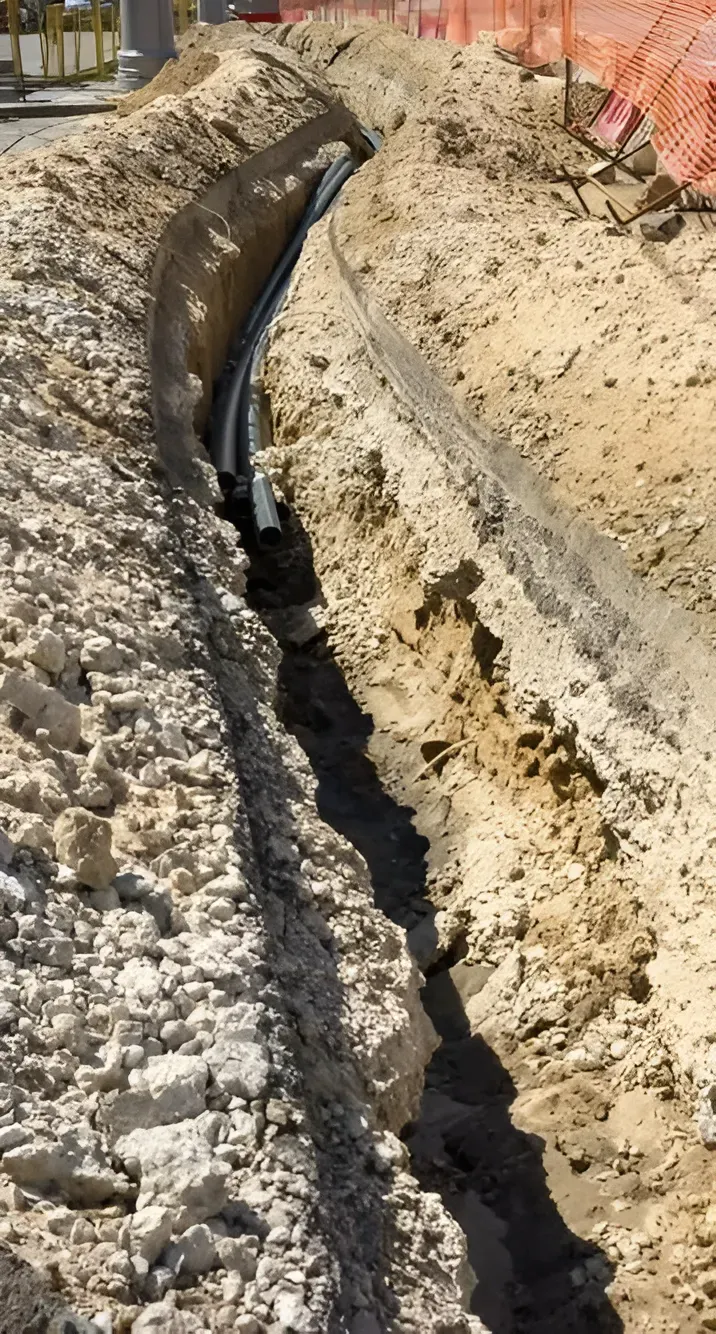
Modern Excavation, Minimal Impact
Airlie Beach Vacuum Excavation
Vacuum excavation is the safest way to dig around critical infrastructure, especially in busy areas like Airlie Beach. This non-destructive method is designed for precision. It uses pressurised air or water to loosen soil, then vacuums the material into a holding tank. The result? A clean, accurate excavation that avoids damaging underground services or surrounding surfaces.
Copp & Co Civil & Plant Hire offers professional vacuum excavation across Airlie Beach for builders, electricians, plumbers and civil contractors. It's ideal for locating services, trenching near structures, or working in tight-access areas where conventional digging poses a risk.
Our skilled team uses the latest equipment to complete jobs efficiently while keeping the site tidy and safe. For vacuum excavation in Airlie Beach, contact Copp & Co Civil & Plant Hire on 0429 776 277.
Highly Trained
Locally Owned
Properly Equipped
Great Value
Clean Results Without the Risk
When Precision Matters Most
In service-heavy or high-risk zones, non-destructive digging offers safety and efficiency without the mess of traditional excavation.
- Ideal for service exposure: Commonly used to reveal water, power and telecom lines prior to repairs or installation.
- Reduces reinstatement time: Less surface disruption means minimal patching or landscaping after the work is done.
- Access to tight sites: Suitable for works near buildings, footpaths or roads with limited room for machinery.
- Minimal environmental impact: Spoil is contained, not spread, making cleanup simple and compliant with local standards.
Vacuum excavation is now the preferred choice for many contractors who need safe, accurate results in complex settings.
FIND OUT MORE
Frequently Asked Questions
How deep can vacuum excavation go?
Vacuum excavation can typically reach depths of up to 3 metres or more, depending on the soil type and equipment used. Deeper excavation may require multiple passes or upgraded gear. It's ideal for exposing buried utilities, even when they’re located below compacted surfaces or layers of fill. However, depth limitations can vary based on the access and the method used, water or air.
Is it safe to use vacuum excavation near tree roots?
Yes, this method is widely accepted for root protection because it avoids the ripping or tearing caused by mechanical diggers. By using air or water pressure to gently loosen the soil, operators can uncover root systems without damaging them. This is particularly useful in landscaped areas or when digging around protected trees. Arborists often recommend vacuum excavation in sensitive green zones.
Does vacuum excavation leave behind a large mess?
No, one of the main benefits is that the spoil is collected in a sealed tank, keeping the worksite cleaner than with traditional digging. This makes it a preferred choice for urban or high-traffic areas, especially when working near driveways, gardens or paved paths. The minimal surface impact also means quicker clean-up, and in many cases, no need for soil removal from site.
Can this method be used on sloped terrain?
Yes, but it depends on the degree of slope and access for equipment. Vacuum excavation units are typically truck-mounted, so a stable, levelled base is needed for the unit itself. The hose and tooling, however, can operate on a range of gradients. With careful setup, vacuum excavation can be used safely and effectively on uneven or sloped sites without compromising accuracy or safety.
contact us
Send Us a Message in Airlie Beach
Contact Us
Thank you for contacting Copp & Co Civil Plant Hire.
We will get back to you as soon as possible.
Oops, there was an error sending your message.
Please try again later.


